Welcome!

We are Ray and Georgina, counselors at City. Week of Service. Teens show kindness. Auction raises $3M. Are you ready for online learning? Roadblocks to getting into competitive universities. Community Colleges Train Doctors. On-site interviews. A dying father. 10K tip. Job Interviews at City College. Budgeting. Colleges that change lives. Jobs. Saving lives.

The veterans page: Crisis line. Military benefits. Veterans Day. Suicide awareness. A surprised 8-year-old. Honoring heroic dog. Honorably discharged veterans shop tax-free. Forever GI Bill. Father takes care of 4 children. Integrate Marine Training? Robotic legs. Costs of war. Saluting a fallen soldier. 300K Lotto winner. Vets and painkillers. Vet resources. Grandmother of veteran's family deported. Housing the homeless. Veteran finds healing through adopting a cat. Wounded Marines help others.


Empowering students to fulfill their dreams through education.


Friday, May 2, 2014

Reducing Stress 2

    
pic by Earl McGehee

The following stress info from J. David Forbes, MD, an expert in stress management operating out of Nashville, TN, was forwarded by Emily Bartel:

Exercise. When you’re stressed, moving around may be the last thing you feel like doing. But as little as 20 minutes a day of physical activity can reduce stress levels. Forbes says just three or four half-hour sessions can lighten stress considerably. As for what type of exercise, try something that you enjoy doing, like swimming or yoga. “You’re not going to continue something you don’t like,” Forbes notes.

Avoid unnatural energy boosters. Artificial stimulants like caffeine pills or prescription meds may help you stay awake for that all-night study session, but putting off your body’s need to sleep will ultimately result in an energy crash, resulting again in a greater susceptibility to stress. “It’s like clipping the wires to your fire alarm while the house burns down,” Forbes says. “Just because you didn’t hear it doesn’t mean the house didn’t burn.”

Friday, April 25, 2014

Reducing Stress

The following stress info from J. David Forbes, MD, an expert in stress management operating out of Nashville, TN, was forwarded by Emily Bartel:

No one is immune from stress, but those entering the ivory towers of college are particularly vulnerable to it.
“When you get to college, it’s usually a fairly sizable life change,” says J. David Forbes, MD, a Nashville, Tenn., physician specializing in stress management. “It’s the first time you’re off on your own. You’re out from any kind of adult jurisdiction. That can bring an overwhelming number of choices.”
Stress occurs when your tension level exceeds your energy level, resulting in an overloaded feeling. “As long as our available energy exceeds our tension level, then we’re in an okay state,” Dr. Forbes says. “But if energy is low and tensions are higher, then that can result in a state of anxiety, depression, and feeling overwhelmed.”
College: Stress Management
If you feel like your brain is melting under the crush of books, classes, and papers, don’t freak out. Follow our stress-management tips to help relieve the pressure.
1.    Get enough sleep. It may be tempting to hit the hay at 4 a.m. and then attend an 8 a.m. class, but shortchanging yourself on rest can increase your stress level. “Winging it on not much sleep has a profound effect on how we experience the stressors of the day,” Forbes says. Plus, insufficient sleep can put you at risk for serious illnesses, such as diabetes, obesity, and depression. Adults typically need seven to nine hours of sleep a night for best health. Forbes also recommends that you align your sleep schedule with normal resting hours by getting to bed before midnight, rather than staying up until dawn and sleeping until mid-afternoon. “The more that our internal clock is closely aligned with the clock of the sun, the better it is,” Forbes says.

2.    Eat well. A steady diet of pizza and vending-machine fare can decrease energy levels in the body, leading to a lower threshold for stress. “You end up feeling very tired and looking for the same [junk food] to kick you back up,” Forbes says. “It’s a lousy cycle of hunting for short-term comfort food or sugar highs that actually keep you feeling worse.” Follow a diet rich in vegetables, fruits, and whole grains.

To be continued . . . 

Tuesday, March 25, 2014

SDSU Initiates Student Fee Increase

pic by Nehrams2020

Get ready to pay $50 more for your classes at SDSU in the fall. The university will charge students a "student success fee" to hire faculty and offer more classes. SDSU Will Impose New Fee was published in the U-T San Diego on March 15, 2014.

Thursday, March 13, 2014

Give and Take


Are you a "giver," a "taker," or a "matcher?" According to author and professor, Adam Grant, "givers" try to help others. "Takers" want a bigger piece of the pie for themselves, and "matchers" try to make sure one hand washes the other. In his fascinating book, Give and Take: A Revolutionary Approach to Success, Grant shows that "givers" prosper in business and success, and that "nice guys" can finish first. If you're in business or you want to be successful in life, check out this book. It's backed with extensive research and examples of people who have gotten ahead by helping others succeed. Find out more by going to www.giveandtake.com.

Monday, March 10, 2014

Educating Students About Breaking a Barrier to Education


You might not have heard the name "Carlotta Walls LaNier," but she is an important and courageous figure in our country's history. In 1957, she was one of nine people to become the first black students to stand up to angry mobs and National Guard troops to attend Little Rock's Central High School in Arkansas. LaNier is now 71, and she is helping City College and other students to appreciate the Civil Rights movement and what it stood for. "My intent is for them to understand why they sit in a classroom with other people who don't look like them, to understand some of the historical piece that they don't necessarily get from their history class or civics class . . ." she said.

Woman Shares Insights As Little Rock Nine Figure appeared in the U-T San Diego on March 7, 2014. The info was forwarded by Heidi Bunkowske.

Thursday, February 27, 2014

Student Clubs!

pic by ProtoplasmaKid

Interested in joining a club on campus? Here is a list of clubs at City. Want more info on clubs? Here are some other clubs/organizations to check out at City. This info was provided by Alma Nava.

Former Gang Member Makes A Difference

Former gang member is studying to be a substance abuse counselor at San Diego City College. Ex-Gang Member Earns National Honor was published in the U-T San Diego on Feb. 25, 2014. The article was forwarded by John Gradilla.

Wednesday, February 12, 2014

UCSD and Peace Corps

pic by Amcaja
UCSD is among the top colleges in the nation in students who volunteer for the Peace Corps. UC San Diego No. 12 on Peace Corps List appeared in the U-T San Diego on Feb. 12, 2014. "UC San Diego continues ... producing volunteers who embrace the call to make a difference in communities overseas," said Janet Allen, West Coast regional manager for the Peace Corps.

See the top colleges for peace corps volunteers for 2014.

Tuesday, February 11, 2014

Social Work

The following info was forwarded by counselor, Roberta Krauss:

What Can I Do With A Degree In Social Work?
Career Opportunities in Social Work include:

Elementary, Middle and High Schools
Public Health Agencies
Family Service Agencies
Community Action Agencies
Child and Adult Care Centers
Private Clinical Practices
Foundations
Armed Forces
Policy Making Organizations
Vocational Rehabilitation Services
Corporate Employee Assistance Programs
Disaster Relief Organizations
Veterans Services
Local, State and National Government
Hospitals
Domestic Violence Shelters
Child Welfare Agencies
Psychiatric Facilities
Rehabilitation Facilities
Emergency Assistance Organizations
Drug Treatment Clinics
Home Care Agencies
Community Mental Health Centers
Senior Citizen Centers
Developmental Disabilities Centers
Youth Development Programs
Jails and Prisons
Colleges and Universities
Career Centers
Legal Service Agencies
Homeless Shelters
Hospices and Nursing Homes


CASE CONSULTANT
Counsels other less experienced social workers, as well as other people involved in some aspect of social work without previous training.

CHILD LIFE SPECIALIST
Alleviates the stress that hospitalization causes for young children and their families through play therapy and other forms of counseling. Acts as an advocate for the child in dealings with the health care team.

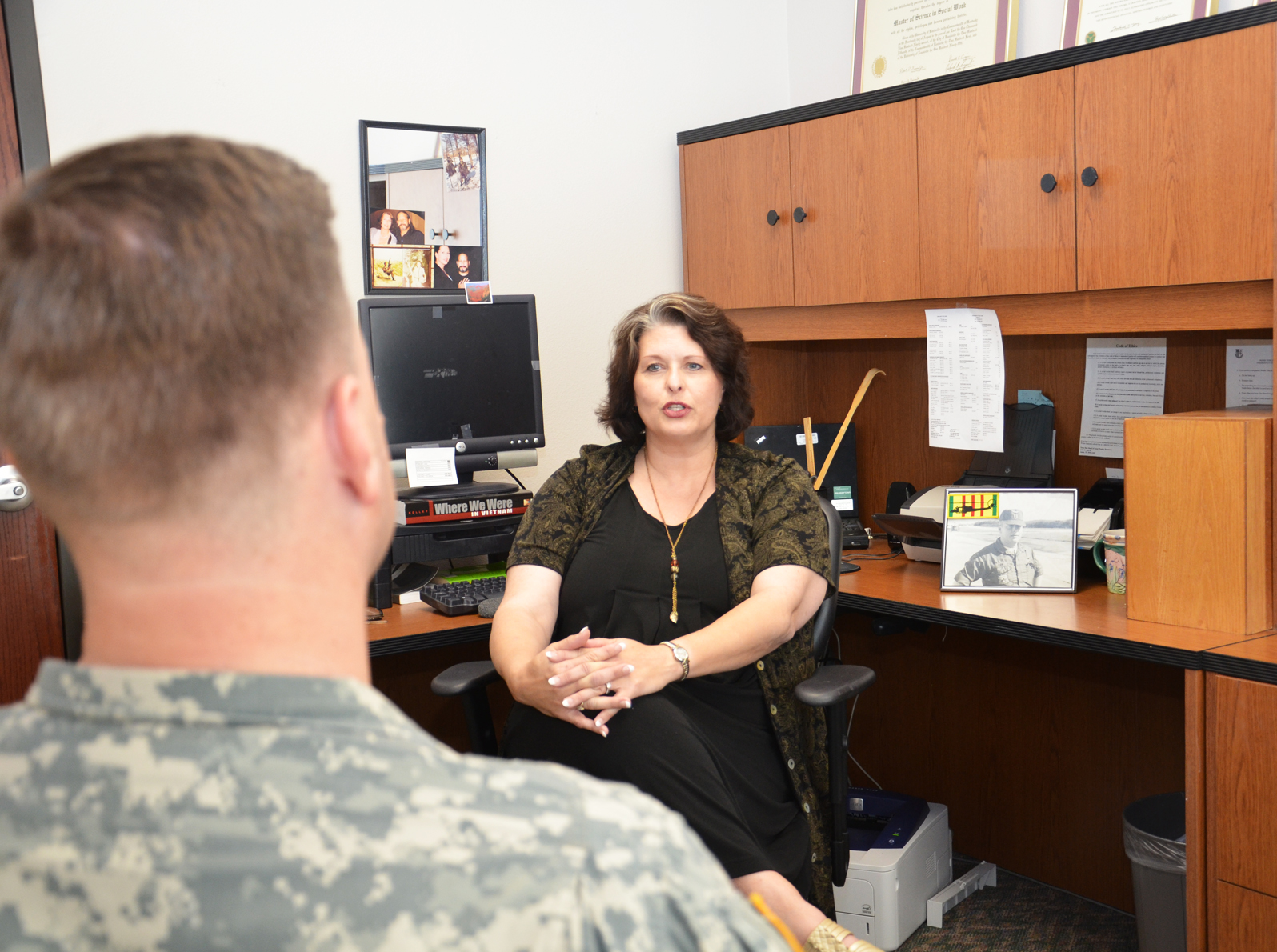
pic Army Medicine
CLINICAL SOCIAL WORKER
Offers psychotherapy or counseling services in public agencies, clinics, and private practice. Requires a master's degree.

COMMUNITY ORGANIZER
Identifies needs in the community, writes proposals to address them and evaluates whether these needs were met. Community organizers are usually supported by state, federal and private funding grants.

COURT-APPOINTED SPECIAL ADVOCATE
CASA workers are appointed by juvenile or family court judges to advocate on behalf of the children who are brought before the court. Meets with those involved in the child's life, gathers information to determine the child's best interests, and recommends a course of action to the court. Most often CASA workers are assigned to cases in which a child has been removed from the care of parents.

CSU San Marcos President Touts Progress

pic by Rennett Stowe

CSU San Marcos president, Karen Kaynes: “I’m proud we are a very innovative, agile institution,” Haynes said. “(We) have weathered six years of the worst economic climate for public higher education … and we have weathered it by growing academic programs, by growing our student populations, by building buildings and by moving forward. There is a spirit here that I am very proud to be a part of and help lead.” San Marcos University President Celebrates Progress appeared in the U-T San Diego on Feb. 8, 2014. 

$20 Million Donation to SDSU

pic by Nehrams2020

A philanthropist named Conrad Prebys is giving $20 million to SDSU to develop scholarships for students. "It is wonderful when you know you've done something right. You feel good about it," he said. Prebys Donates $20M to SDSU for Students was published in the U-T San Diego on Feb. 6, 2014.

Friday, January 31, 2014

Lessons From Orientation continued by Kelli Turpin

pic by Tulane Public Relations

Lessons from Orientation (continued):

The Computer is Stupid (or: Look at Your Schedule, Silly)
Computers do exactly what you tell them to do and nothing else. Therefore, it’s up to you to make sure you know what you’re telling it.

During Registration/Before the Semester Starts
After you’ve registered for all of your classes, click on the “View Schedule” button.  This is your moment to make sure that you didn’t accidently transpose a number within the CRN (Course Reference Number) and register for Ceramics at Mesa when you really meant to enroll for Beginning Stagecraft at City.

This is also the moment to make sure that the classes you scheduled back-to-back are really at the same campus. The computer requires that you have at least 10 minutes between classes. It will let you register for a class at City that ends at 11:00 a.m. and a class at Miramar that starts at 11:10 a.m. Because the computer doesn’t drive, it doesn’t care that you cannot physically get from City to Miramar in 10 minutes.

While you’re paying attention to details on Reg-E, click on “View/Pay Fees.” Most people have to pay the $19 health fee – even if you have Financial Aid. If you don’t pay your fees, you will be dropped from your classes. Even if you’ve already paid the health fee, click on the Fees button just to make sure (see above “The Computer is Stupid”). I don’t think you’ll be dropped, but better safe than sorry.

If you’re on a wait list for a class, you need to check your e-mail and/or Reg-E at least a couple of times a week. Once you get the notification that you’re able to add from the wait list, you only have a few days to do it. After that, the next person gets the class and you get dropped from the wait list. For some classes, that’s not much of an issue. For others (like English or Biology), it could be critical.

After the Semester Starts
The most important thing to do at the beginning of the semester is to look at your schedule on Reg-E. If you look at your schedule on the second Monday of the semester and find that you’re actually not enrolled in that Art class you love so much, you have plenty of time to make that happen (the deadline is the second Friday -- February 7th for spring 14). If you wait until the third Monday, you’re out of luck. You will not be able to register for any class after the add date.

Make sure that you drop any class you’re not actually attending. Professors are supposed to drop students from their roster who are inactive, or did not show up for class. Usually, they’re pretty good at it. Sometimes, they overlook someone.

pic by Arthur Grigoryan
Pop Quiz: To whom is your life more important? You or the professor?

Answer: You, Silly. Therefore, it is your responsibility to make sure you’re enrolled in classes that you’re attending and that you’re not enrolled in classes you are not attending. 

Monday, January 27, 2014

Lessons from Orientation Continued (Math) by Kelli Turpin

picture by Galaksiafervojo


Lessons from orientation continued: 

Math is one of those subjects that most people either love or hate. If you love it, definitely take it your first semester. Consider majoring in something that requires lots of math – engineering, economics, computer science, physical sciences – because those are majors that are connected with jobs that tend to grow.

If you hate math, you have a couple of choices:

a.       Take it your first semester and plow through until you’re done – once you’ve started, don’t stop. Math builds on itself, so keep building.

b.      Wait a semester. There’ll be flak for this one. Here’s my logic. If you think that you’re going to struggle in math and this is going to be your first semester in college, waiting for a semester to start math will give you the opportunity to succeed in college courses. Once you’ve succeeded, you know you have the study skills and ability to do well in college. At that point, you know that any issues you have with math are with math specifically and not with college generally. Waiting also gives you the opportunity to figure out how much time classes will take without math, so you have a better idea of how much time to budget for math – or how many other classes you can take with math.

Keep in mind that you can’t earn an associate degree without finishing Math 96 (or its equivalent) and you can’t transfer without a class that has Math 96 as a prerequisite. So don’t put it off too long.

Also know that all the baggage you carry around in regards to math is probably from some moment or series of moments in elementary school. You’re not 10 years old anymore – chances are, with the right professor (use ratemyprofessors.com), you’ll actually get it now.

If you need help in math, there is free tutoring available in our tutorial center (room L-205), and you can always arrange to meet with your math instructor during office hours to make sure you are on track.  

Sunday, January 26, 2014

SDSU Student Fee?

picture by lo2013
San Diego State University is considering a new student fee to help pay for classes and instructors. "SDSU Considers Student Fee to Pay for Additional Faculty" was published in the U-T San Diego on Jan. 25th, 2014.

Cinema Jobs!


Pacific Arts Movement is a nonprofit formerly known as the San Diego Asian Film Festival. They are hiring for the positions of Marketing and Outreach Director (open immediately) and Development Director (open immediately).

Monday, January 13, 2014

Scholarships!


The San Diego Foundation has scholarship info. There is a list of separate scholarships managed by the Foundation with their own timelines. Another list of external scholarships provides more scholarship opportunities for San Diego County students.

If you want to create your own profile for scholarships, go to www.fastweb.com. This website is not affiliated with The San Diego Foundation.

Monday, December 16, 2013

Lessons From Orientation by Kelli Turpin

picture by Tomwsulcer
I spent last summer doing an orientation or two every day. I noticed that I hit on certain things regularly, even though they weren’t in the presentation. Call them lessons learned; call them nuggets of wisdom. Here are the things I’ve noticed students need to know to be successful.

The big question I get asked over and over again by first-time students is “What do I take?” The answer is almost always, “It depends.”  But here’s my formula: in an ideal world (a world where you can get any class you actually want to take), you should take one or more English classes and/or Math, plus at least one course you want to show up for. Why?

pic by carmichaellibrary
English is the basis for every other class. The better you read, the easier it is for you to get information via the written word, the easier every other class will be. This is key if you’re not yet eligible for college-level reading. It’s not impossible to do well without the appropriate English level, but it’s difficult. Instructors assume a certain level of reading competence and measure the amount of reading based on that. If you’re not there yet, you’ll be spending more time reading than the other students who have better skills. Chances are, if you’re not reading at college level, reading probably isn’t your favorite thing, anyway – do you really want to do any more of it than you have to?

If you’re ready for college reading, but you still need another class or two for writing, I’d suggest getting started. It’s not as imperative, but you will be writing papers and the more practice you have, the easier it will be – and the less time you’ll have to spend doing it.


If you tested at college level English (Both R5 and W5 on the assessment), it would still be worthwhile to get that first composition course out of the way.

To be continued in a future post ...

Wednesday, November 27, 2013

Giving Thanks by Raymond M. Wong

 Thankful


Thanksgiving is a time of gratitude, a time of appreciation. This is what I’m thankful for: Quyen, my wife of 15 years. She is my foundation, my best friend, the reason I get up in the morning, the person I hold lovingly in my arms at night. She is the mother of my children and the person I cherish with all my being. In an uncertain universe, she is my light.   

Kevin, my twelve-year-old son. When I was growing up, I wasn’t sure I wanted to be a parent.  No, I was certain I didn’t want to be a father because I was afraid of the responsibility. Being a parent is the single most important job anyone can ever hold, and I didn’t want to screw it up, so I told myself I wouldn’t take it on. Safer that way. Quyen believed in me when all I had was doubt and fear. She knew I would be a good dad, and that was enough for me. Now, when I gaze upon my son, I am filled with a sense of wonder. The world isn’t such a scary place. No, in fact, it’s a place of joy, of braces that need to be fitted, fantasy books yet to be read, Minecraft to be played, miles to be jogged in an afterschool running club, and a future of hope and bonding between father and son.

picture by Cliff from Arlington, VA
Kristie, my nine-year-old daughter. Quyen and I named our little girl after figure skater Kristi Yamaguchi because of the Olympic athlete’s artistry on the ice. Kristie personifies her mother’s grace in that she knows what to say and do in any given situation. She knows how to make people comfortable, and everyone trusts her. Kristie is the embodiment of all that’s good and precious in the world, and I am so very blessed to be her father.

Work: Sigmund Freud—“Two hallmarks of a healthy life are the abilities to love and to work. Each requires imagination.” In working at a college, sometimes I face bureaucracy and politics that tarnish the real purpose of why we’re here. Every day at San Diego City College, I get to help students who are striving for something better in their lives, and they’re doing it through education and learning. That's what we're really about.

Books and writing: there is a beauty and power in words. They can convey so much when a story comes from a place of purity, of soul and spirit. When words ring true and connect to the fabric of our being, it is something miraculous and awe inspiring. Thank you to Jeannette Walls for the The Glass Castle, for teaching me that a child can persevere and forgive in the face of the most desperate circumstances. Thank you to Antoine De Saint-Exupery for The Little Prince who learned to see with his heart. Thank you to Cormac McCarthy for The Road, a post-apocalyptic world of darkness and despair that opens a window to life and humanity. Thank you to all the writers who struggle to compose sentences in the hope of giving us a glimmer of truth.